A statement issued by UNAIDS emphasized the advantages of drawing on the historical and clinical precedents established by AIDS and applying them to this new situation. Winnie Byanyima, executive director of the organization, stressed that the lesson of COVID-19 goes beyond the development of an effective drug to reduce the devastating effect of the pandemic. For her, this situation could result in the sustained transformation of health systems around the world, benefiting people who live with limited access to consistent and effective health services.
One of the biggest concerns for doctors specializing in HIV treatment is co-infection with other conditions that increase the range of probable risks of complications in their clinical picture.
In the case of SARS-CoV-19 (COVID-19), the risks for a person living with HIV are practically the same as those for other patients with other chronic conditions. The difference, in this case, would be that people living with HIV should responsibly adhere to their treatment and the protective measures recommended by the US Centers for Disease Control (CDC).
Since the medical community received the first reports of a possible epidemic of unknown origin with a high probability of spreading to the rest of the world, we never imagined the scope and depth of COVID-19's impact on the planet. The number of people infected with the virus exceeds 3.6 billion, and the death toll—more than 4 million—has hit society hard in economic, social, and even political terms. Similarly, misinformation on the subject has caused great confusion due to unverified data published on social media, even leading to mass protests against the supposed imposition of mask-wearing in various parts of the world.
Probable risks: what happens if COVID-19/HIV co-infection occurs?
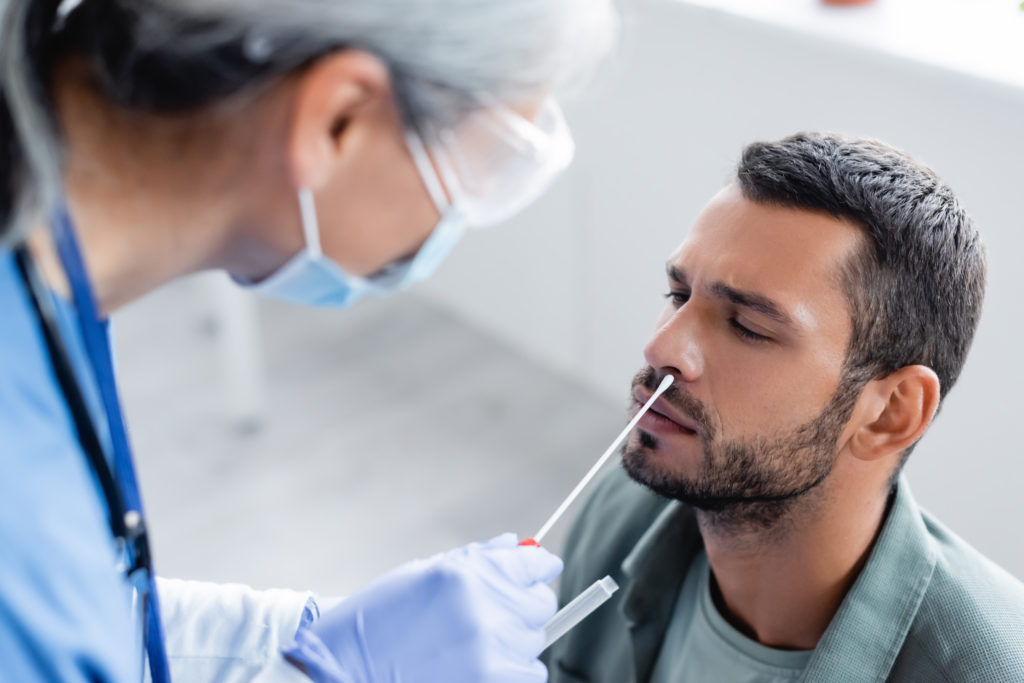
There are no current statistics on the incidence of SARS-CoV-2/HIV coinfection cases, but medical literature has emerged documenting the impact of coinfection in various instances. The published articles show more or less similar conclusions:the effects of COVID-19 on patients diagnosed with HIV who have suppressed viral load and adhere to ART are practically similar to those of a person who does not have the condition.
According to information published by the National Institutes of Health (NIH), the following observations, based on clinical evidence, are emphasized: "The treatment of COVID-19 in people with HIV is the same as for people without HIV. When initiating treatment for COVID-19 in patients with HIV, clinicians will consider, with greater attention, drug interactions and potential toxicities that may occur between treatments for COVID-19, antiretroviral therapy (ART), antimicrobial treatments, and other medications."
Other published studies indicate that, in general, a person living with HIV could manage COVID-19 infection much more successfully if they have maintained adherence to antiretroviral therapy (ART). However, the concern of the medical community, particularly among HIV-treating physicians, is now focused on the onset of the influenza and pneumonia season. As this is a novel virus that affects the pulmonary system, a co-infection of COVID-19, HIV, and influenza/pneumonia in immunosuppressed patients could be fatal.
How are these circumstances handled? In the case of influenza and pneumonia prevention, it is important to integrate clinical care components to guide people living with HIV on vaccination. In an extensive dialogue with Dr. Anthony Fauci, director of the National Institute of Allergy and Infectious Diseases (NIAID), a conference was held in which the experienced American infectious disease specialist emphasized the value of vaccination.
Fauci commented in the interview that the complications that could occur in general for the population affected by what he called the "twindemic" (or "double pandemic") will depend on how much of the population gets vaccinated for influenza, as well as how they maintain their awareness of the importance of physical distancing, suspending indoor gatherings, wearing masks, and washing their hands. Fauci pointed out that COVID-19 is not a trivial matter, so it was necessary to act "with the tools we have, and one of them is the flu vaccine."
In the case of people living with HIV, a fragile immune system would have fatal consequences, especially if they have a low CD4 cell count—an important tool of the immune system—and if they are not on ART. Similarly, people over 50 with other comorbidities—hypertension, diabetes, cardiovascular and lung diseases—would be at greater risk if they did not get vaccinated. Fauci assured that even if a person contracted influenza after being vaccinated, the symptoms would be milder.
Proven remedies: how can people living with HIV protect themselves from co-infection?

The CDC's main recommendation for HIV patients is the same as for people without this diagnosis: follow the general self-care guidelines already in place, such as frequent hand washing, wearing a mask at all times, and physical distancing. In addition, patients should eat well, sleep seven to eight hours a day, and, above all, minimize stress. Because this virus affects the entire body, these CDC guidelines are essential for HIV patients: with an immune system strengthened by adherence to ART, good eating habits, rest, and relaxation produce excellent results.
UNAIDS stressed the importance of patients with this condition taking the recommended precautions to avoid contracting COVID-19. However, the organization emphasized the risks faced by socially disadvantaged populations living in unsanitary conditions and lacking access to safe drinking water and food security. In this "new reality," it is essential to continue providing clinical care to psychosocially disadvantaged populations, to be sensitive to people with substance use disorders, to provide access to pre-exposure prophylaxis (PrEP) to reduce HIV infection, and to make rapid tests available for early detection of the virus. In this regard, community-based and nonprofit organizations have been more effective.
However, an assessment study on the impact of Afro-descendant populations in the Caribbean, conducted bythe Institute for Latinx Health Equity, confirmed through interviews with various organizations—including Centro AraratUNAIDS' concern about the social marginalization associated with the pandemic. The study confirmed that both the organizations and their participants had had to operate in survival mode to protect the health and well-being of their patients while continuing the effort to eradicate HIV by 2030.
Among other issues, this study revealed that the COVID-19 pandemic impacted both the health and psychosocial aspects of its participants, especially in the areas of mental health, food insecurity, financial stability, and community interconnection/integration. Although reports of seroconversion are scarce, interviewees reported the possibility of an increase in HIV transmission within these communities. It also emphasized the possibility that this social inequality could have a long-term impact on the effect of COVID-19 on these participants, including HIV acquisition, which would seriously aggravate their overall situation.
This study also revealed that institutions have had to use creativity to stay connected with their participants, as physical distancing rules reduced the impact of clinic visits, support groups, and other community outreach efforts for HIV prevention. Centro Ararat to various strategies to promote services through social media and by sending rapid home HIV tests, so that these "distant" participants could be contacted for linkage to care and other support services.
Probable risks can be addressed with the right information and resources that a provider specializing in HIV management can provide. Proven remedies remain anchored in the responsibility that each person will assume in the face of the pandemic, which, as we know, is an inescapable reality. For people with HIV, attention to their own health care, including adherence to ART, the prevention measures outlined by the CDC, and influenza vaccination, will be their best allies in avoiding co-infection and maintaining optimal health.
The content on this page is for educational and informational purposes only. It does not replace or substitute consultation with a doctor or other healthcare professional.
Related topics