
By: Tito Orlando Ortiz, MPHE
Did you know that prostate cancer is one of the most common cancers in Puerto Rico? According to the World Health Organization, nearly 3,000 cases of prostate cancer were diagnosed on the island in 2020.
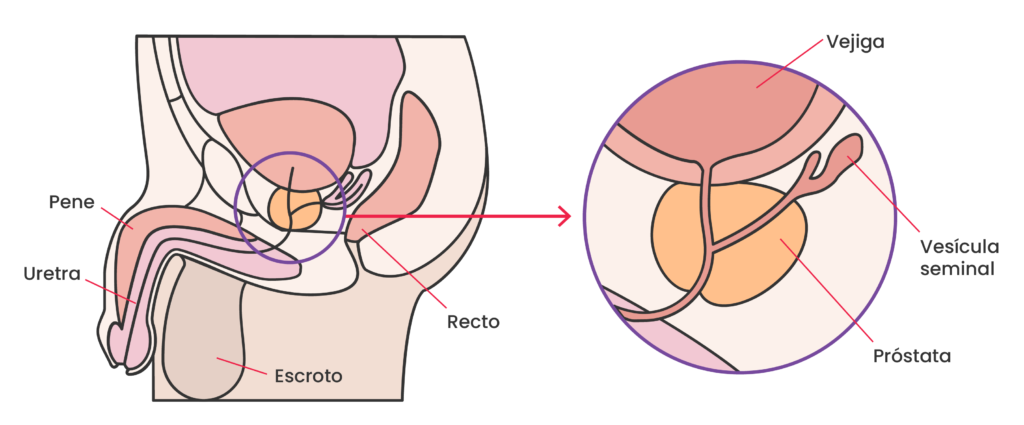
But what is the prostate, and where is it located?
The prostate is a gland located below the bladder and is part of the male reproductive system. According to the Centers for Disease Control and Prevention (CDC), this gland is responsible for producing the fluid that makes up part of semen.
So, how can you identify possible prostate cancer?
According to the National Cancer Institute, there are various signs and symptoms that a man with prostate issues might experience, which could be warning signs of possible prostate cancer:
- Pain or a burning sensation when urinating
- Frequent Urge to Urinate
- Weak urine stream
- Blood in the urine or semen
- Painful ejaculation
- Pain in the back, hips, or pelvis
It is important to note that not all changes in the prostate are indicative of cancer. For example, as a person ages, his prostate enlarges, and this can lead to benign prostatic hyperplasia (when the urethra narrows and reduces urine flow), according to the CDC.
Although the specific cause of prostate cancer is unknown, the American Cancer Society suggests that some of the risk factors include age—the risk increases after age 50—as well as a family history of prostate cancer and race or ethnicity; statistically, prostate cancer is more common among Black and Caribbean men.
Therefore, we recommend that you talk to your doctor to find out if the warning signs you’re experiencing are indicative of prostate cancer. Below are several questions suggested by the National Cancer Institute that you might ask your doctor during that initial visit:
- What kind of prostate problem might I have?
- What tests will I undergo?
- What will these tests measure, and how often should I take them?
- What other symptoms might I experience, and what should I watch for?
- What kind of treatment do you recommend? Does it work?
- Should treatment begin now? How long will it last?
- Do I need any medication? How long should I take it? Will this improve my symptoms? What are the side effects?
How is a basic prostate exam performed?
There are several types of prostate exams, but the most common is the digital rectal exam. Wearing gloves and using lubricant, the doctor will insert a finger into your rectum until it touches the prostate. This test takes 10 to 15 seconds and is used to check the size, firmness, and texture of the prostate; for external tumors, lumps, or any hard areas; and for any pain caused by touching or pressing on the prostate, according to the National Cancer Institute.
Remember to see your doctor regularly, and if you're over 50, ask about a prostate exam to help prevent infections or possible prostate cancer.
References:
- CDC. (2021). What Is the Prostate? Retrieved from:
- El Nuevo Día. (2021). High Incidence of Prostate Cancer in Puerto Rico. Retrieved from:
- National Cancer Institute. (2021). What Changes in the Prostate Mean. Retrieved from:
- American Cancer Society. (2019). What is prostate cancer? Retrieved from:


Related topics