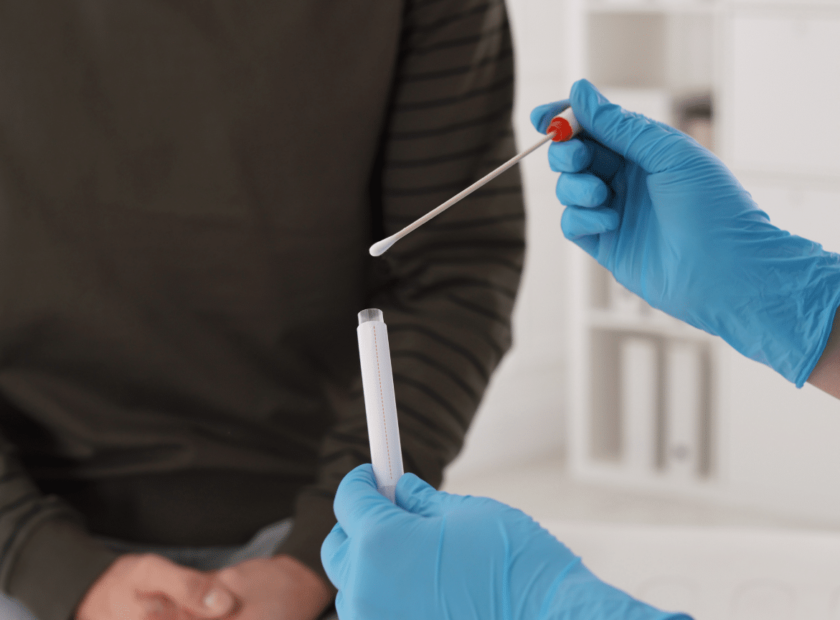

Talking about sex shouldn't be taboo, especially with your partner. However, it's normal to feel nervous or anxious about this conversation, but having this talk about birth control methods and how to prevent sexually transmitted infections (STIs) will allow you to have the healthy sex life you want.
The Centers for Disease Control and Prevention (CDC) recommends that, before having sex, you talk to your partner about how you’re going to prevent STIs and unplanned pregnancies for the sake of both of your well-being and health.
If you feel ready to have sex, you should also be ready to protect your body. Before having sex, you should also discuss which practices you’re willing to engage in and which ones you’re not. There must always be respect for your right to choose and to say no to practices that make you uncomfortable.
Below, we offer 10 tips to help you start a conversation with your partner about these crucial topics in a relationship.

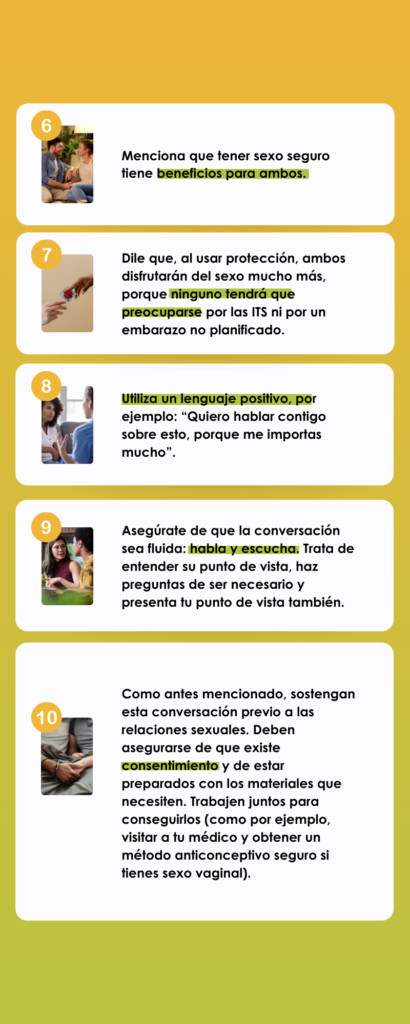
Once you’ve had this conversation, you should evaluate the necessary protection methods for the sexual activity you plan to engage in. For example: if you’re going to have vaginal sex (penis-in-vagina), it’s really important to use a condom and another form of birth control, such as the pill or an intrauterine device (IUD). By using both methods, you’ll be protected from an unplanned pregnancy. Using a condom will protect you from STIs. If you’re having anal sex, you need to use a condom and lubricant to protect yourselves from STIs. On the other hand, if you’re engaging in oral sex, you can choose between a condom or a dental dam to protect yourselves from STIs.
What You Shouldn't Do
- Avoid starting the conversation right when you're about to have sex—it's embarrassing and a problem if you don't have protection with you.
- Don't be prejudiced, aggressive, or controlling.
- Don't assume that you want to use condoms because you think your partner is being unfaithful. Explain that using condoms is a way to protect both you and your partner.
Remember that starting a conversation about preventing STIs and unplanned pregnancies—even if it feels awkward at first—will help you avoid bigger problems down the road. It’s better to be safe than to have to deal with a diagnosis of an infection or an unwanted pregnancy.
References:
- Centers for Disease Control and Prevention (CDC),
- Planned Parenthood, https://www.connecticutchildrens.org/health-library/es/teens/the-talk-esp/,


Related topics